My Journey
What I am building now, what shaped it, and what I learned along the way.
-
2021–2023 4th–5th Grade
Gears Before Code
I spent a lot of time building LEGO and other mechanical sets with motors, gears, and moving parts. I liked following the instructions at first, but I liked taking things apart and changing them even more.
By the end of 5th grade, I wanted to do more than connect gears and motors. I wanted to control what I built with code.
-
2023–2024 6th Grade TURNING POINT
The Spark
My dad gave me an Arduino Starter Kit for my birthday. I started with a blinking LED, then buttons, sensors, and projects I found online. Most of them did not work the first time, but I loved seeing a few lines of code make something happen in the real world.
-
2024–2025 7th Grade
Trying More on My Own
I started building projects that combined code, sensors, and movement. An Arduino car taught me how to work with motors and sensors, and later I discovered the ESP32 and built a simple web page that let me control servos from my phone.
This was also when I started moving away from copying tutorials and trying more ideas of my own. By the end of 7th grade, I signed up for PLTW Introduction to Engineering because I wanted to learn more before taking on bigger projects.
-
2025–2026 8th Grade TURNING POINT
Building With Purpose
In 8th grade, I started thinking differently about my projects. Instead of only asking, "Can I build this?" I started asking, "What problem could this solve?"
Fall 2025: Ashtavakra Begins
The idea came from a LEGO grabber I had built years earlier. I started Ashtavakra as my own robotic-arm project and built an early version to see if I could get the mechanics, electronics, and code working together.
Explore the Ashtavakra case study →Spring 2026: AERO-LITE
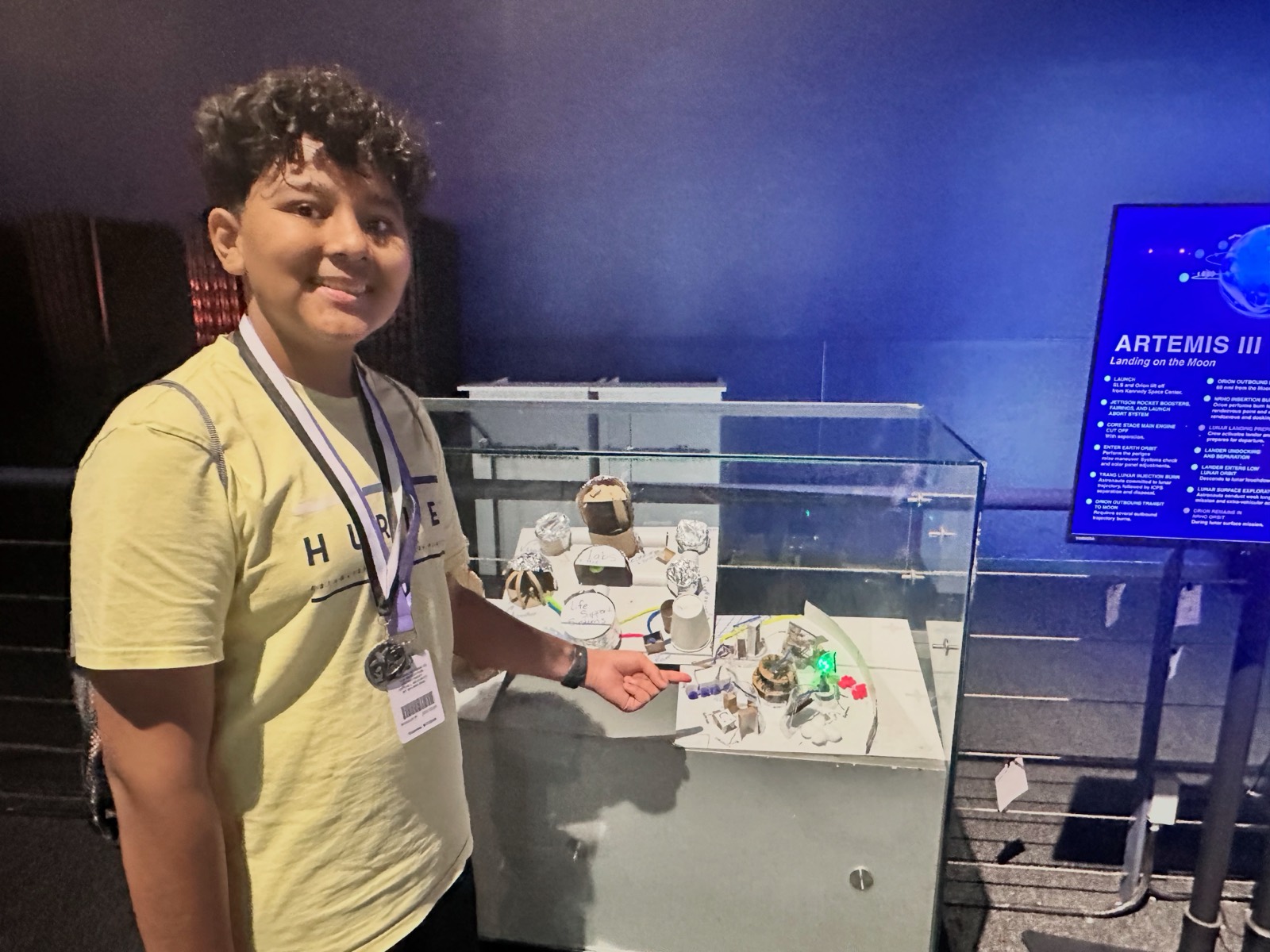
I entered Space Center Houston's Carbon Capture Challenge and built AERO-LITE, a project focused on removing CO₂ from the air in a future lunar habitat. I had to learn about chemistry, sensors, electronics, programming, and a lot of things I had never worked with before.
Explore the AERO-LITE case study →May 2026: Top Individual Award
AERO-LITE received the Top Individual Award in the Middle School division. I was excited about winning, but what mattered even more was realizing that I could start with something I barely understood, keep learning, and turn the idea into a working project.
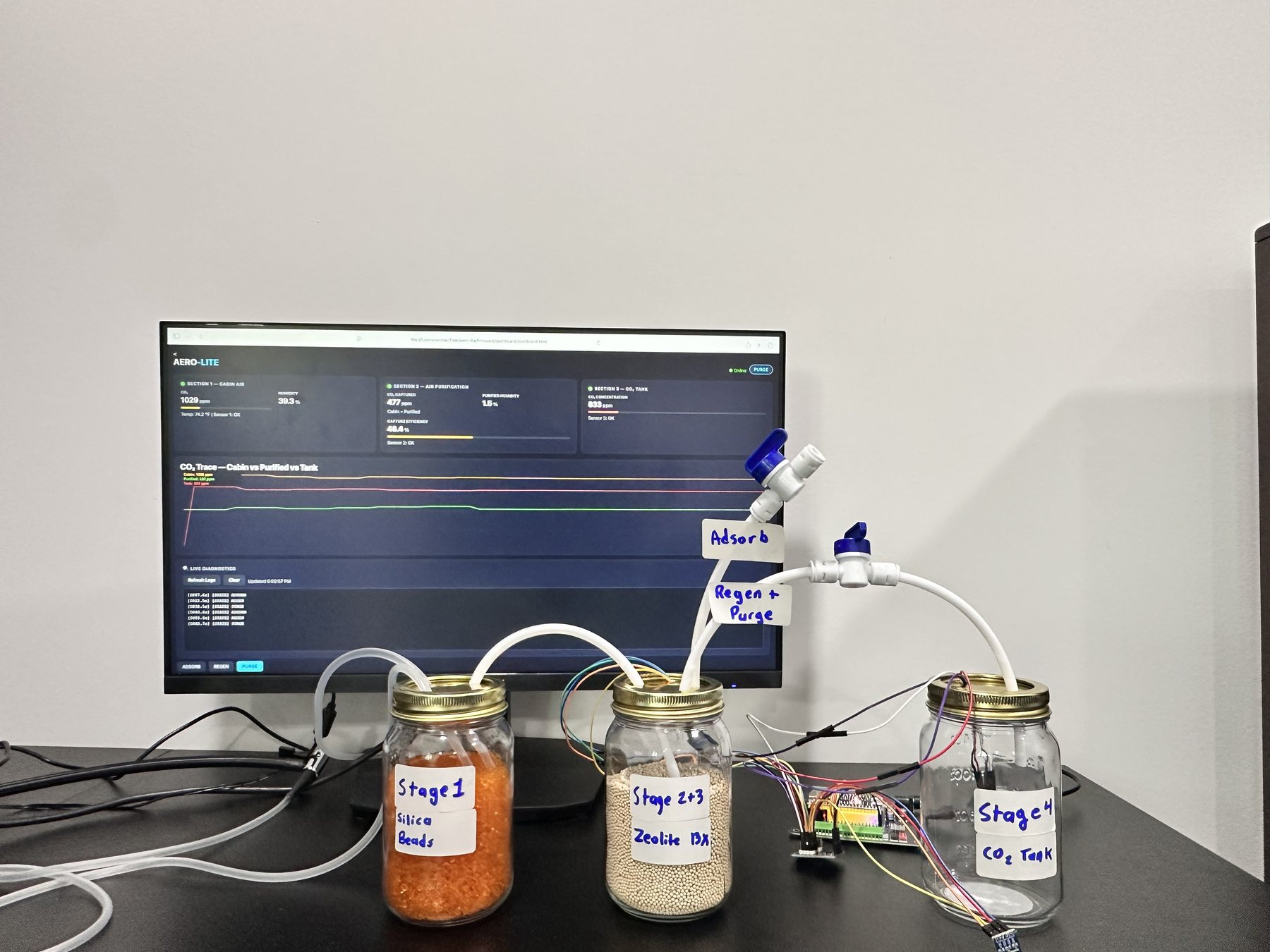
Phase 1 prototype: three mason jars, a live ESP32-S3, and a dashboard updating every second. -
2026-2027 Freshman Year
From Control to Vision
I started high school with a challenging course load that matches where I want to go: PLTW Principles of Engineering Honors, Algebra 2 Honors, Biology Honors, English Honors, and AP World History. I wanted freshman year to push me both technically and academically while I continued building projects outside the classroom.
Summer 2026: A Working Ashtavakra
I turned Ashtavakra from an early test into a working 3D-printed robotic arm that I can control over Wi-Fi. It can move the way I tell it to, but it still depends on me for almost every decision.
Fall 2026: Giving It Vision
I am now working on the Vision AI part of Ashtavakra. My goal is for the arm to recognize objects and eventually use what it sees to help decide how to move. It is still a work in progress, and I am learning a lot while trying to make the different parts work together.
How control reaches the arm: browser → Wi-Fi → Arduino UNO R4 WiFi → motor driver → servos. Vision is the next link in that chain. -
2027+ Looking Ahead NEXT
Looking Ahead
Ashtavakra: After finishing the Vision AI work, I want to keep exploring how the arm can do simple tasks with less help from me.
AERO-LITE: I want to continue testing the project and collect better data to understand how well the CO₂ capture idea actually works.
Aerospace: I want to take on bigger aerospace and rocketry projects that push me to learn more physics, engineering, teamwork, and testing.
Keep Building: As I learn more math, science, programming, and engineering, I want my projects to grow with me. I hope I keep choosing things that are just a little beyond what I already know how to do.
How I Approach Projects
Start Small
Big projects feel less overwhelming when I start with one simple goal. Make one motor move. Read one sensor. Get one part working. Then build from there.
Test, Don't Guess
When something does not work, I try to change one thing at a time and see what actually happens. I have learned that guessing usually creates more problems.
Learn From What Breaks
I have burned boards, wired things incorrectly, and spent hours chasing the wrong problem. Those mistakes are frustrating, but they are also the parts I usually remember and learn from the most.
Keep It Simple
I used to think adding more parts and features made a project better. Now I try to find the simplest solution that does the job well before making it more complicated.
Build Safely
Working with batteries, motors, heat, and moving parts has taught me to think about what could go wrong before I turn something on. A working project is not worth much if it is not safe.
Share What I Learn
I document my projects because I know how helpful it is to find someone else's explanation when I am stuck. If my notes help another student get past a problem, they are worth writing.